Showing posts with label World News. Show all posts

Tuesday, 3 December 2013

Positive parenting won't make up for yelling, insulting


Young adults who had been criticized, insulted or threatened by a parent growing up were more likely to be anxious or depressed, in a new study.
Even when the same or another parent expressed plenty of affection, researchers found the apparent harmful effects of having a verbally aggressive mother or father persisted.
"There's a fair amount of data out there that says that parental verbal aggression toward a kid is very damaging," Byron R. Egeland said.
"In many instances, people find it to be as damaging as actual physical abuse," he told Reuters Health.
Egeland has studied child maltreatment and development at the University of Minnesota in Minneapolis and was not involved in the new research.
Past research has linked verbally aggressive parenting to changes in children's brain development and to personality disorders later in life, researchers led by Ann Polcari write in the journal Child Abuse & Neglect.
Polcari, from Northeastern University in Boston, and her colleagues wanted to see whether also receiving affection from parents would lessen those impacts.
Their study included about 2,500 young people, ages 18 to 25. They each took a series of online surveys as part of being screened for in-person tests and interviews for other research.
Participants reported both on their current mental health and wellbeing and on their experiences with their parents growing up.
They rated each of their parent's verbal aggression on a scale from zero to 105, based on how often mothers or fathers yelled at, scolded, insulted and blamed them as kids. More verbally aggressive parents got higher scores.
Study participants gave their mother's verbal aggression an average score of 22. They scored fathers between 26 and 29.
Verbal affection was measured from zero to 84, with higher scores reflecting a parent who expressed more affection and engaged in more meaningful conversations with the child.
Participants scored their mothers between 65 and 66 on that scale, on average, and their fathers between 54 and 55.
Young adults tended to have more psychiatric symptoms like anxiety and depression when either their mother or their father was verbally aggressive.
What's more, although having a verbally affectionate parent seemed to have a positive impact on young people's wellbeing, it didn't make up for having a second parent who was verbally aggressive, Polcari's team found.
And having one parent who was both affectionate and aggressive wasn't any better for a young person's psychiatric health than if that parent was only aggressive.
"It isn't as if one cancels the other," Timothy Moore, from York University in Toronto, told Reuters Health.
"Whatever the benefits of positive expressions may be, the negative association between verbal aggression and adjustment persisted," Moore said. He has studied the effects of verbal aggression in childhood but wasn't involved in the new study.
"It certainly is important that there be somebody there that the kid can count on, starting at an early age," Egeland said.
"But a large amount of verbal abuse or for that matter having a parent who is emotionally unavailable or physically abuses the kid - those kids will grow up with the idea that they can't count on others. Those are kids that oftentimes don't benefit from the support of a neighbor or coach or relative," he said.
"If the abuse starts at a very early age, it's likely that kid is not going to have trust in much of anybody."
Egeland said the fact that verbal aggression is more common in poor families means children who experience it are also more likely to have single parents and lower quality schools - compounding their risks.
One limitation of the study, the researchers noted, is that participants recalled their parents' verbal aggression from years earlier to the best of their memories. They also reported their own symptoms and weren't checked by a doctor for psychiatric illness.


Wednesday, 23 January 2013

World's 10 safest and unsafest airlines

World's 10 safest and unsafest airlines

 1.Finnair

Finnair Celebrates 85th Anniversary In Milan Finnair has been rated the safest airline in the world, based on the study that monitors plane crashes around the world. 


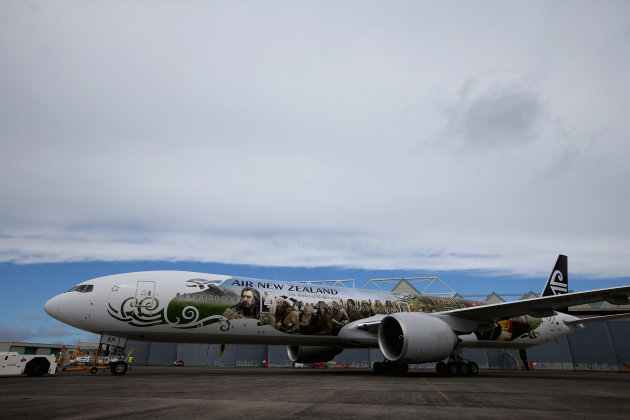
 2.New Zealand

New Zealand Prepares ForAir New Zealand has been rated as the world's second safest airline. 


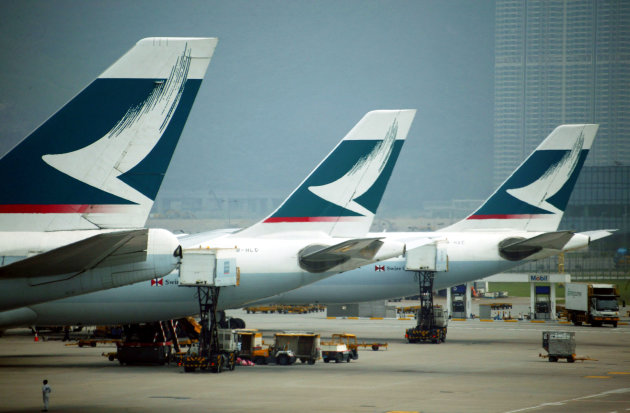
3.Cathay Pacific

Cathay Pacific AirlinesAccording to the report, none of the top nine ranked airlines had lost an aircraft or had a fatality during the 30-year period. Cathay Pacific is ranked at No.3 in terms of safety.


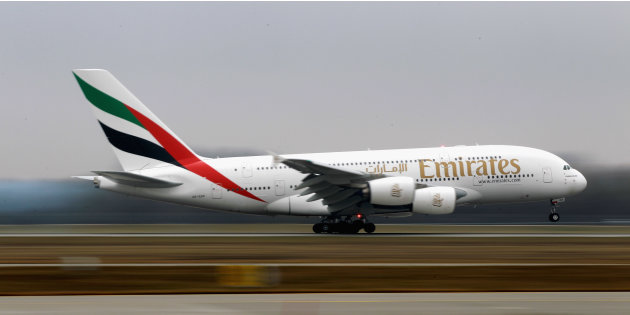
4.Emirates Airline

Emirates Launches Daily A380 Flights From Dubai To MunichDubai-based Emirates Airline is ranked at No.4 for safety.


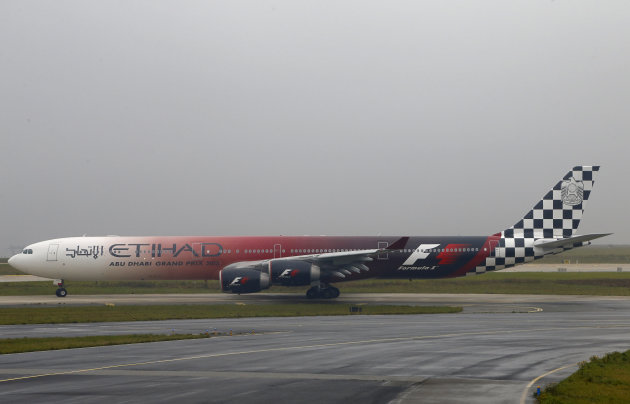
5.Etihad airways

World's 10 safest and unsafest airlinesAnother airline from the United Arab Emirates; Abu Dhabi-based Etihad airways comes in next in the rankings.


6.EVA Air

World's 10 safest and unsafest airlinesRank 6: EVA Air is an airline based in Taiwan, operating passenger and dedicated cargo services to over 40 international destinations in Asia, Australia, Europe and North America. It is the second largest Taiwanese airline, next in size to its main rival, China Airlines.

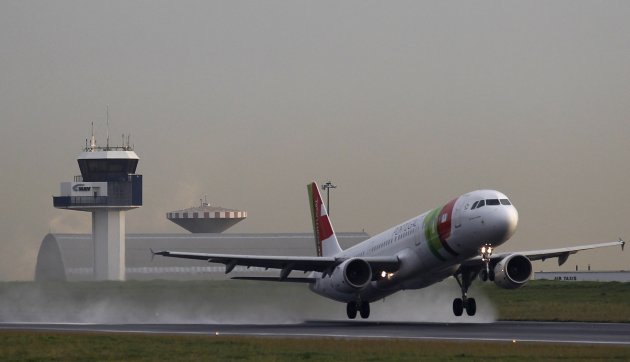
7.TAP Portugal

An Airbus jet of TAP Portugal airlines takes off in Lisbon airportRank 7: TAP Portugal, founded 1945 as Transportes Aéreos Portugueses, SGPS, S.A., commonly known as TAP, is the national airline of Portugal.


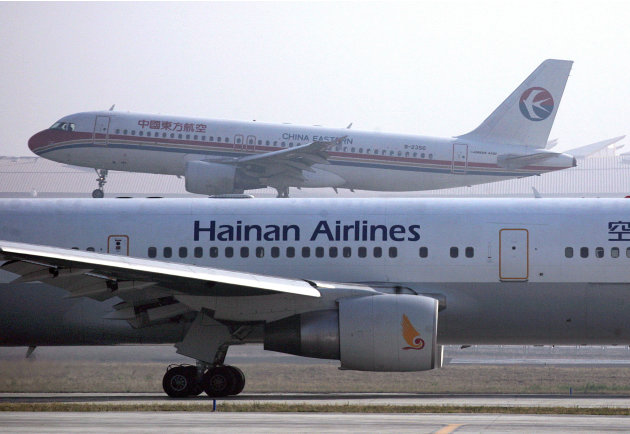
8.Hainan Airlines

World's 10 safest and unsafest airlinesRank 8: Hainan Airlines is the largest privately owned air transport company and the fourth largest airline in terms of fleet size in the People's Republic of China. It operates scheduled domestic and international services on 500 routes from Hainan and nine locations on the mainland, as well as charter services.

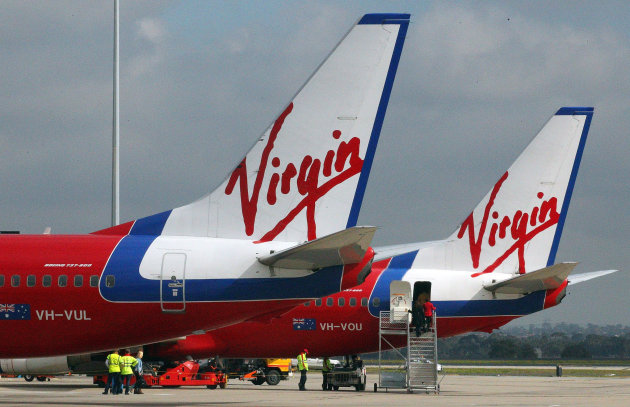
9.Virgin Australia

Tiger Airways Resumes FlightsRank 9. Virgin Australia: formerly Virgin Blue Airlines, is Australia's second-largest airline as well as the largest by fleet size to use the Virgin brand. Now based in Bowen Hills, Brisbane, Queensland, Australia, the airline was co-founded by British businessman Sir Richard Branson and former Virgin Blue CEO Brett Godfrey. It was established in 2000 with two aircraft operating on a single route, and suddenly found itself catapulted to the position of Australia's second airline after the collapse of Ansett Australia in September 2001. The airline has grown to directly serve 29 cities in Australia from hubs in Brisbane, Sydney and Melbourne, using a fleet of narrow-body Boeing and Embraer jets; and Airbus and Boeing widebody jets.

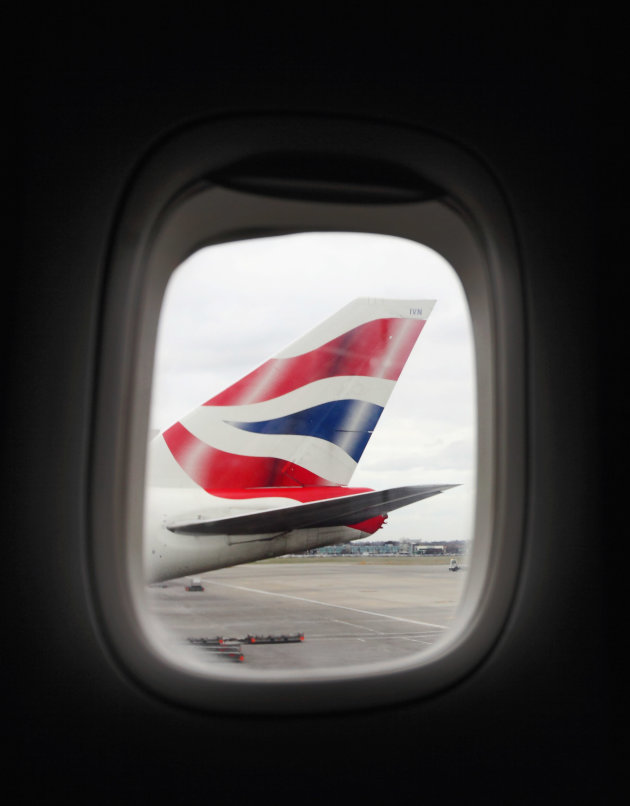
10.British Airways

Activity in Heathrow Airport's Terminal 5British Airways has been ranked as the tenth safest airline in the world.


Opening Brief in Supreme Court Gay Marriage

Opening Brief in Supreme Court Gay Marriage Case


Let the filing of the gay marriage briefs begin! On Tuesday, proponents of Proposition 8 — the controversial California ballot initiative that defines marriage as between a man and a woman — filed their opening briefs with the Supreme Court, urging the justices to reverse a lower court decision that struck down the state’s ban on gay marriage.
Arguments in the case will be heard at the end of March, and briefs from the opponents are due in about a month.
“By adopting Proposition 8,” Charles Cooper, a lawyer for ProtectMarriage.com, writes, “the People of California demonstrated their belief that this matter is best resolved by the People themselves, not by their courts. The Equal Protection Clause does not prohibit the People of California — or any State — from making this choice. To the contrary, it leaves them free to do what they are doing — debating this controversial issue and seeking to resolve it in a way that will best serve their families, their children, and, ultimately their society as a whole.”
ProtectMarriage.com, the original sponsor of Prop 8, is defending the law because California’s elected officials refused to do so. The group argues that preserving traditional marriage furthers society’s “existential interests in responsible procreation and childrearing.”
“An animating purpose of marriage is to increase the likelihood that children will be born and raised in stable and enduring family units by their own mothers and fathers,” Cooper writes.”  Because relationships between persons of the same sex do not have the capacity to produce children, they do not implicate this interest in responsible procreation and childrearing in the same way.”
Cooper criticizes a federal appeals court that struck down Prop 8 on narrow grounds tailored closely to California and its history with gay marriage.
For a few months in 2008, gay couples in California were able to obtain marriage licenses after a ruling from the California Supreme Court. Some 18,000 same sex couples obtained marriage licenses in the state before Prop 8 was passed in November 2008.
In February of 2012, a panel of judges on the 9th Circuit Court of Appeals ruled that Prop 8 “stripped same-sex couples” of the right to use the designation of marriage to describe their relationships and that Prop 8 “serves no purpose, and has no effect, other than to lessen the status and human dignity of gays and lesbians in California and to officially reclassify their relationship and families as inferior to those of opposite-sex couples.”
In his brief, Cooper points out that there was only a brief period of time in California’s history when same-sex marriage was allowed. He writes, “it is difficult to think of a law with deeper roots in California’s and our Nation’s history, practices, and traditions than one defining marriage as the union of a man and a woman. That definition has prevailed for all but 142 days of California’s 162 year history, and it continues to prevail in federal law and in the overwhelming majority of the States, most often through constitutional provisions much like Proposition 8. ”
Cooper makes a veiled reference to the fact that President Obama has only recently come out in support of gay marriage. He writes, “The Ninth Circuit’s charge thus impugns the motives of over seven million California voters and countless other Americans who believe that traditional marriage continues to serve society’s vital interests, including the citizens and lawmakers of 40 other states, the Members of Congress and President who supported enactment of the federal Defense of Marriage Act, the large majority of state and federal appellate judges who have addressed the issue, an until very recently President Obama. ”
Cooper points out that prop 8 left “undisturbed” other laws, including domestic partnership laws available to gays and lesbians in the state.

'UN mission in Kashmir can be terminated only by UNSC'

'UN mission in Kashmir can be terminated only by UNSC'

As India and Pakistan clashed in the Security Council over relevance of the UN observer group at the LoC, a spokesperson for UN chief Ban Ki-moon said the force can be terminated only by a decision of the 15-nation body.
The United Nations Military Observer Group in India and Pakistan (UNMOGIP) was "established in 1948 by the Security Council. The Secretary-General's position has always been that UNMOGIP can only be terminated by a decision of the Security Council," Ban's spokesperson Martin Nesirky said in an email said.
During a UNSC open debate on peacekeeping organised by Pakistan yesterday, India's Permanent Representative to the UN Hardeep Singh Puri had said that UNMOGIP's role had been "overtaken" by the 1972 Simla Agreement, which was signed between India and Pakistan.
Following the Simla pact, the two countries had resolved to settle their differences by "peaceful means through bilateral negotiations," Puri said.
The Indian envoy had also suggested that it would be better to spend the resources allocated for UNMOGIP in other areas or missions to ensure the finances are better utilised elsewhere in times of austerity.
Rejecting any suggestion of winding down the UN mission in Jammu and Kashmir, Pakistan's Permanent Representative to the UN Masood Khan said UNMOGIP continues to monitor the ceasefire in accordance with Security Council resolution and its mandate is "therefore fully valid, relevant, and operative".
Khan said no bilateral agreement between the two nations has "overtaken or affected" the role or legality of the observer group adding that "the fact is that both India and Pakistan are hosting UNMOGIP".

Tuesday, 15 January 2013

Facebook shares rise in buildup to mystery event, earnings


Facebook shares rise in buildup to mystery event, earnings


(Reuters) - Facebook Inc's stock opened on Monday above $32 for the first time since July as anticipation about upcoming products and financial results underscored Wall Street's renewed confidence in the online social network.

                                            Facebook will on Tuesday host its first major press event at its headquarters in Menlo Park, California, since its troubled initial public offering in May, triggering a guessing game among technology observers and online blogs about what it could unveil - everything from a smartphone to a search engine.
"There's a lot of speculation. Nothing to me seems to be that certain," Jefferies & Co analyst Brian Pitz said.
"If I were to bet, I'd think it was something that was ad-platform related. I'm not convinced on the phone," said Pitz, citing previous comments by Facebook's leaders including CEO Mark Zuckerberg that making a smartphone would be the "wrong strategy" for Facebook.
In an email to reporters last week, Facebook invited the media to "come and see what we're building" without providing details.
Some analysts said the stock's recent gains - shares are up roughly 17 percent since the start of the year - may have more to do with the company's upcoming fourth-quarter financial results, slated for January 30.
"The stock is up because they have driven a dramatic increase in the ad load of their mobile app which is giving investors hope that they exceeded expectations," BTIG analyst Richard Greenfield said.
Shares were down about 1.3 percent to $31.30 in mid-afternoon trading.
The world's No.1 social network with 1 billion users, Facebook became the first U.S. company to debut on stock markets with a value of more than $100 billion. Its value subsequently plunged by more than 50 percent on mounting concerns about slowing revenue growth and the challenges of making money as users shift from personal computers to mobile devices.
Facebook surprised Wall Street in the third quarter by announcing that mobile ads accounted for 14 percent of its total ad revenue. Some analysts expect the company to report further growth in its nascent mobile ad business for the fourth quarter.
Zuckerberg, who founded Facebook in his Harvard dorm room, has said that mobile is the "most misunderstood aspect" of Facebook. But he has repeatedly poured cold water on rumors that Facebook would build its own smartphone to compete against Apple Inc's iPhone and smartphones based on Google Inc's Android operating system.
During an on-stage interview at a conference in September, Zuckerberg said that he believed search could be a ripe area of growth for Facebook.
"Facebook is really uniquely positioned to answer a lot of the questions that people have," Zuckerberg said, such as finding a good restaurant or learning more about a job opportunity.
Still, many technology observers believe that Facebook is more likely to improve the search capabilities within Facebook than to develop a full-fledged search engine that indexes all the Web's content and competes head-on with search leader Google.
Among the other items that technology blogs and analysts speculate might be unveiled on Tuesday were new standalone apps for Apple's iPad tablet, new features to display video ads and even a new wing of corporate headquarters.
Some cautioned that expectations of a game-changing new product were likely to cause disappointment.
"There's no way they're announcing anything that has financial impact, or they wouldn't do it now, they'd wait two weeks," said Wedbush Securities analyst Michael Pachter, citing Facebook's upcoming earnings

In southern Delhi, a slum lives in fear and uncertainty

     In southern Delhi, a slum lives in fear and uncertainty

 (Any opinions expressed here are those of the author, and not necessarily of Thomson Reuters)

                                 Raju Saini appears fidgety and nervous as he talks about his cousin. He speaks matter-of-factly, but there is a hint of caution in his voice, as if he is wary of what we might think about him and the place where he lives. Fifteen minutes into the conversation, he says what has been on his mind.
“We know what we are going through. Now even if people don’t say it out openly, they know we are from Ravidas camp, and eye us with suspicion whenever we go to work. This incident has given us a bad name,” said the 40-year-old man. Saini is tall and lanky with salt-and-pepper hair and a thin moustache, and was wearing grey thermals on the day we met in the slum.
Saini’s cousin is Ram Singh, probably the most hated man in the country. He is the main accused in the assault and rape of a 23-year-old physiotherapy student in a moving bus in Delhi on Dec. 16. The woman died two weeks later after being moved to a hospital in Singapore. The assault, along with four other adults and a juvenile, shocked India and the world, and renewed public debate over the failure of authorities to stem violence against women.
Raju and his wife Asha live in a small one-room dwelling in a slum in the southern part of New Delhi. The slum, known as Ravidas camp, is where four of the six accused in the crime were living before being arrested. It is nestled between a derelict medieval tomb and a temple. Like many slums, dark, narrow lanes snake through shabby quarters, communal taps and open sewers. And like many slums in India’s cities, it squats amid a largely middle-class neighbourhood.
The neighbourhood, RK Puram, is dotted with shopping complexes and government-owned apartments for the many employees who run the national capital’s bureaucratic machinery. It is a well planned locality with wide streets and tree-lined boulevards.
Raju, Asha and many inhabitants of Ravidas camp speak in hushed tones about what it’s like living in a place made infamous by the blanket coverage that Indian and international media have devoted to the attack and its aftermath. It is apparent that their hitherto unnoticed existence on the fringes of India’s economic boom has been intruded upon, and thrust them unwillingly into the public eye, sometimes at a risk to their lives.
On Dec. 31, a man walked into the slum and threatened to blow up Ram Singh’s dwelling. Singh’s neighbours recall that the person claimed to be a soldier, and screamed at everyone to vacate the locality before he would lob crude bombs into Singh’s house.
“He screamed ‘Get out. I am going to destroy this house. I have orders from the government.’ That seemed strange to us as he was asking for directions to Ram Singh’s place. One of the children dialled 100 and called the police,” said one of Singh’s neighbours.
Inhabitants say there is heavy police presence outside the slum at night, and the police keep paying visits to speak to families of the accused as part of their investigations.
At the other end of the slum, some 50 yards from Singh’s dwelling, is a one-room house with a tin roof. This is where Vinay Sharma lived before the police picked him up. His three younger siblings and parents, along with a TV, an air cooler and all their other belongings, fit into a space the size of an average office cubicle.
His mother Champa Devi tries to hold back tears as she describes what she has gone through since Sharma was arrested. She did not know about the heinousness of the crime until she saw the reports on TV. She says she fainted and her husband has taken ill since their son was taken away.
“I have experienced things which I never thought I would. Every day the police and people from the media land up, asking the same questions,” she said, maintaining that if Sharma was guilty, he should be hanged.
When I spoke to Raju Saini, he asked me for a favour. “When you report, please take care not to say anything which might damage the situation even further. We are scared … Ever since that person threatened to blow up Ram Singh’s house, we have been scared.”

6 security personnel killed in militants' attack in Pakistan


6 security personnel killed in militants' attack in Pakistan


                                  ISLAMABAD: Six security personnel were on Tuesday killed and 16 others injured when militants attacked a check post in the restive Khyber tribal region of northwest Pakistan.

Militants attacked a check post in Shalobar area in Khyber Agency.

State-run Radio Pakistan quoted officials as saying that six security personnel were killed and 16 others injured.

Security forces retaliated against the attack and forced the militants to retreat, the officials said.

TV news channels reported that militants attacks four check posts in Shalobar area.

The reports said personnel of the Frontier Corps and Khasadar militia were among those killed in the overnight clash.

The militants attacked the troops with heavy weapons that damaged one of the check posts.

The attacks occurred in an area dominated by the Lashkar-e-Islam group led by warlord Mangal Bagh Afridi.

Wednesday, 1 August 2012

Olympics hockey: India suffer another reverse, lose 1-3 to Kiwis

 London, Aug 1 (IANS) New Zealand chalked up a 3-1 win over India who thus slid to their second defeat in as many matches in the Olympic men's hockey competition here Wednesday.

India, after a sensational start when Sandeep Singh converted a second minute penalty corner, faded away as the Kiwis came storming back with goals by Andrew Hayward (13th), Phillip Burrows (24th) and Nicolas Wilson (29th), and then nursed the lead to the end.It was a very disappointing performance by the Indians who just did not have the pace or power to overwhelm the Kiwis. Rather, age-old errors seemed to creep into India's game with badly positioned forwards inside the striking circle, over-dribbling and lack of variety in their attacks.

In the deep defence, too, the Indians looked a step slower than the Kiwis and, more often than not, struggled to get the ball away from the danger zone. So much so that for the second-half coach Michael Nobbs replaced captain and goalkeeper Bharat Chetri with Sreejesh, who justified the substitution with a couple of good saves.In contrast, the Black Sticks, who had beaten India 5-1 en route to winning the Azlan Shah Cup in Malaysia earlier this summer, appeared better organized in the midfield and deep defence while the forwards bided time for the long balls to counter attack.

In fact, the Kiwi defenders seemed to read the Indian attacks rather well and had enough men behind the ball to stall the rivals.India, who went down 2-3 to the Netherlands Monday, promised a lot in the opening minutes when they forced a penalty corner that Sandeep Singh converted, picking a brilliant angle and height to slot the drag-flick into the net.

However, the Kiwis kept their composure and gradually came back into the match while the Indians backpedalled at the first sign of counter-attack and provided a lot of space for the Black Sticks to make their moves.The Kiwis, who lost 0-2 to Korea in their opening game, accepted the invitation and began to attack in waves and forced two penalty corners, the second of which Hayward converted for the equaliser.

The Kiwis sustained the pressure and, with their forwards slipping through a rather porous Indian defence, it was only a matter of time before they scored. Another Hayward penalty corner attempt saw the ball deflecting on to defender Birendra Lakra's body off goalkeeper Bharat Chetri's stick resulting in a penalty stroke that Burrows converted.

The pattern continued and the Kiwis scored again on a counter-attack from the right wing as Wilson put Shea McAleese through and then was on hand to put home the return pass to put New Zealand 3-1 up.The Indians, apart from their opening spell, were hardly in the frame except during some sporadic raids that were easily repelled by a well-structured Kiwi defence.

The second-half was rather scrappy with the Kiwis more intent on pegging the opponents inside their own half while the Indians seemed to wilt under ceaseless pressure, unable to put together an effective attack.

Also, two yellow card suspensions in this session, first Sardar Singh for retaliation and Manpreet Singh for deliberate infringement, did not help India's cause while Sandeep Singh failed to convert two back-to-back penalty corners in the last quarter while Raghunath's attempt came off the post in the dying minutes.The Kiwis had a few chances to add to their first-half tally, notably three penalty corners, but Sreejesh brought off some fine saves to peg the score-line.

Olympics: BWF rejects India's appeal, Jwala-Ashwini out


London, Aug 2 (IANS): It was finally the end of the road for India's top women's doubles pair of Jwala Gutta and Ashwini Ponnappa in the 2012 London Olympics after their appeal was shot down by the Badminton World Federation (BWF) here Wednesday.

The Indians had accused the Japanese pair of Mizuki Fujii and Reika Kakiiwa of "wanting to lose" a Olympic Games group match against the Chinese Taipei team. India's appeal of a re-look at the match came after the BWF suspended four female pairs for "not using one's best efforts to win a match".

The suspended pairs are Wang Xiaoli and Yu Yang of China; Greysia Polii and Meiliana Jauhari of Indonesia; Jung Kyung Eun and Kim Ha Na of South Korea; and Ha Jung Eun and Kim Min Jung, also of South Korea.

However, they were not from Group B, of which the Jwala and Ashwini were a part of. The Indians finished third in their group.

A disappointed Jwala said that they were not angry but disappointed.

"We are not angry, but disappointed. It was unfortunate. But we gave our best. Fixers should not be allowed to take part in the Olympics," said Jwala.

Ashwini told IANS that they had given their best.

"We have given our best and that is all we could do. Some things are not in our control," she added.

India coach Pullela Gopichand, a former All-England champion, said match-throwing does not stop there.

He claims that once China lost to Denmark in Group D Tuesday, Japan "wanted to be second" in Group B.

The No.4 seeds Fujii and Kakiiwa went down 19-21, 11-21 to the unseeded Cheng Wen Hsing and Chien Yu Chin of Chinese Taipei at the start of the afternoon session, and despite Gutta/Ponnappa winning against the Chinese Taipei pair and Singapore, the Indians failed to qualify.

"In Group B, (Chinese) Taipei had to and wanted to win, but Japan wanted to lose to be second in the group to avoid China," said Gopichand.

"We put in an appeal protest this morning and the BWF has come back saying they didn't find any bias or anything beyond the ordinary in the matches. We've filed an appeal to review that decision."

"Just because it's subtle and the crowd didn't make a noise, the TV didn't make a noise, doesn't mean it didn't happen. In this match only one team wanted to lose."

London Olympics chief organiser Sebastian Coe described the incidents as "depressing", saying "who wants to sit through something like that".

International Olympic Committee spokesman Mark Adams said that such incidents were "not acceptable".

Tuesday, 31 July 2012

Gatecrasher Madhura Strikes Again


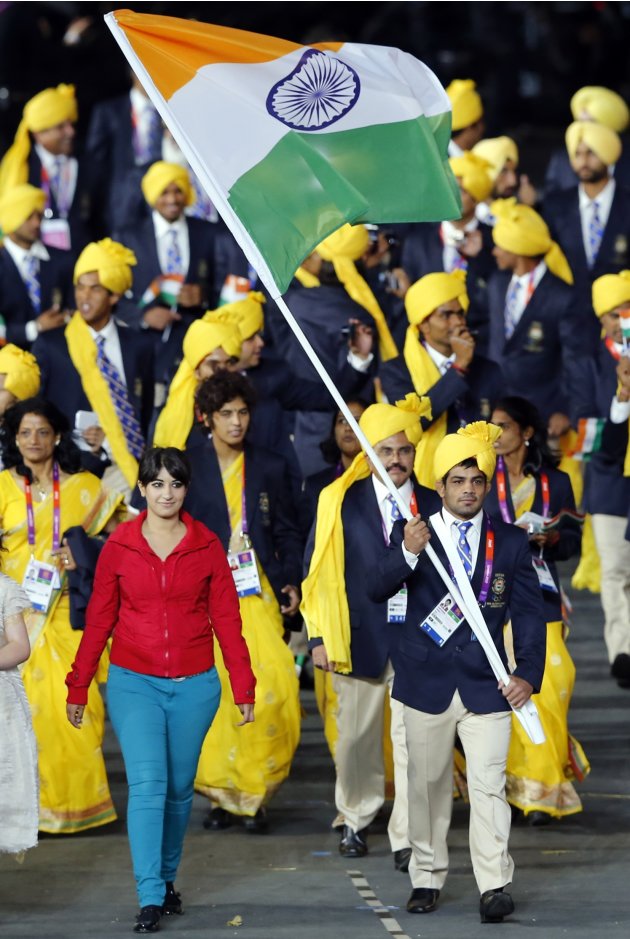
Madhura Honey seen walking alongside India's flag bearer Sushil Kumar at the opening ceremony of the London 2012 Olympic Games July 27, 2012.


She's seen at the Royal Wedding...


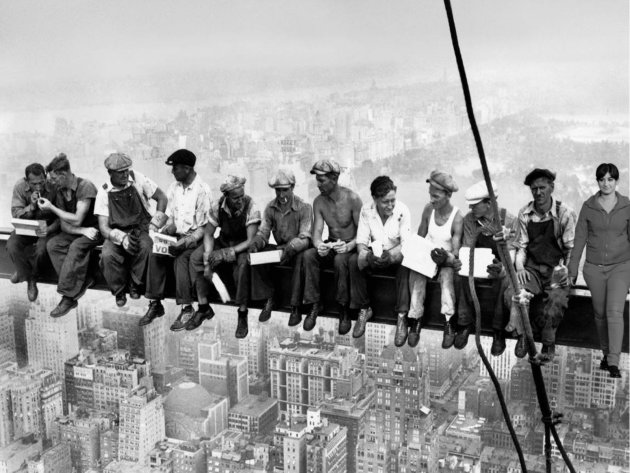
and having lunch atop a skyscraper...


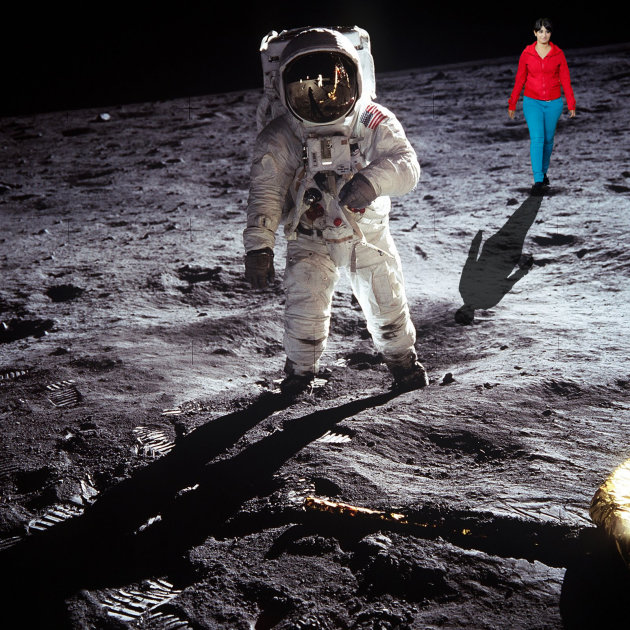
 and then stealing Neil Armstrong's thunder...


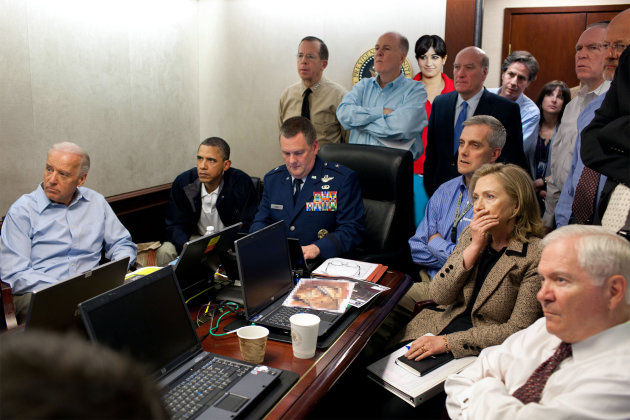
and watching Osama die...


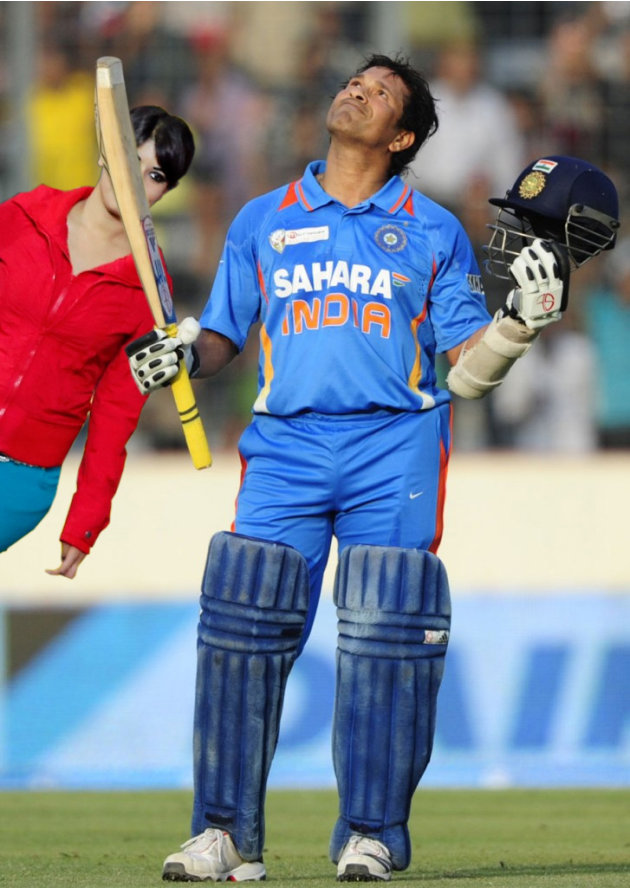
and celebrating Tendulkar's 100th hundred...


and seen with the Oscar winners...


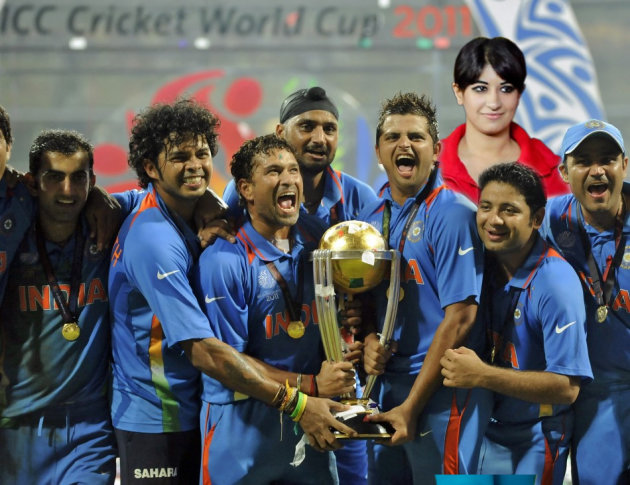
 and celebrating with the Indian team at the Wankhede Stadium


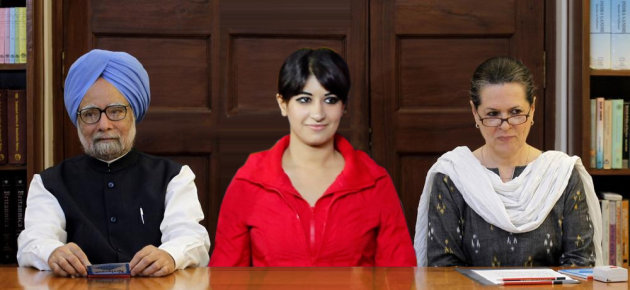
 and attending Congress Party's general meetings...


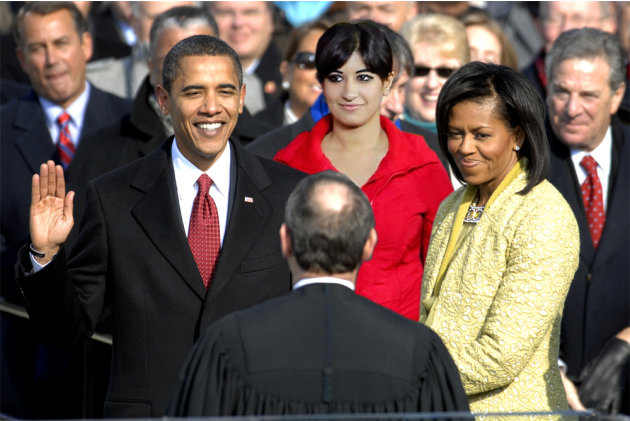
and seeing Obama being sworn in...


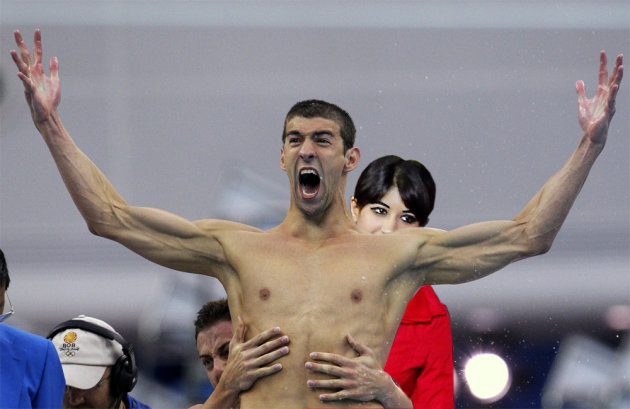
and also seen by Michael Phelps' side when he created history at the Beijing Olympics.


Monday, 23 July 2012

London Olympics: Brand wars gather pace on streets of London

LONDON: In the shadow of London's gleaming Olympic venues, a quiet battle is under way over who gets to cash in on the Games.

Olympic organisers have enforced strict rules to protect official trademarks, deploying about 250 uniformed "brand police" on the streets of the capital to ensure businesses do not piggyback off the world's biggest sporting event.

The rules are simple: no one outside a small band of official sponsors such as McDonalds or Adidas is allowed to make a profit by creating an association with the Games.

It is not the rules themselves that have irked some Londoners but their stringent enforcement and phrases such as "absurd" and "police state" - often used jokingly but with a shade of resentment - frequently crop up in conversation.

"It's mad. It just seems... that corporations are being looked after but not the people," said Lewis Parrin, 22, who runs a stall selling jewellery and watches in London's eastern district of Stratford where the main Olympic venues are located.

"It's quite scary, really. It's like a police state." Another vendor nearby, when asked about a display of Olympic mascots on his makeshift stall, choked on his sandwich and removed them hastily. "I am glad you reminded me," he said.

London is buzzing with curious stories of those who have found themselves on the wrong side of the brand police such as a stall owner who was told off for displaying the London 2012 logo and a butcher in a town hosting sailing events who had to remove a sign showing the Olympic rings made from sausages.

On a quiet side-street within walking distance of the Olympic stadium where the Games open officially on Friday, a cafe called Olympic has had to paint over the letter "O" to comply with the rules.

Some have taken a more radical approach with a subversive new campaign mocking the policing and the brands themselves - a theme that has struck a chord with many in London's eastern areas where unemployment and social resentment run high.

On Monday, a pair of activists calling themselves guerrilla artists chose a busy street in east London to put up a giant protest billboard showing rows of police lined up against a dark background, and a slogan reading "INSPIRE A GENERATION".

Some passers-by paused to look, bewildered. An Olympic-style logo in the bottom right corner of the billboard read: "Official Protester of the London 2012 Olympic Games".

"The problem with Olympic advertising is that there is no ethics. It's supposed to be about excellence but it's not reflected in their branding partners," said one of the activists, who asked to be identified only by his nickname Del.

"Local businesses have been there for generations (but) they can't even promote things made locally. How is London supposed to prosper, really? It's sucking out their sense of pride and enjoyment."

Saturday, 21 July 2012

Amazing Space Photos

This NASA image obtained July 11, 2012 shows an artist's rendering which illustrates the evaporation of HD 189733b's atmosphere in response to a powerful eruption from its host star. The exoplanet is a gas giant similar to Jupiter, but about 14 percent larger and more massive. The planet circles its star at a distance of only 3 million miles, or about 30 times closer than Earth's distance from the sun. Its star, named HD 189733A, is about 80 percent the size and mass of our sun. Exoplanet HD 189733b lies so near its star that it completes an orbit every 2.2 days. In late 2011, NASA's Hubble Space Telescope found that the planet's upper atmosphere was streaming away at speeds exceeding 300,000 mph. Just before the Hubble observation, NASA's Swift detected the star blasting out a strong X-ray flare, one powerful enough to blow away part of the planet's atmosphere.
 
An alien world just two-thirds the size of Earth - one of the smallest on record - detected by NASA's Spitzer Space Telescope is seen in this NASA artist's illustration released by NASA on July 18, 2012. The exoplanet candidate, known as UCF-1.01, orbits a star called GJ 436, which is located a mere 33 light-years away. UCF-1.01 might be the nearest world to our solar system that is smaller than our home planet. Evidence for UCF-1.01 turned up when astronomers were studying a known, Neptune-sized exoplanet, called GJ 436b, seen in the background in this image. The identification of nearby small planets may lead to their characterization using future instruments. In this way, worlds like UCF-1.01 might serve as stepping stones to one day finding a habitable, Earth-like exoplanet.


This NASA image released July 11, 2012 shows a computer-simulated image of gas from a star that is ripped apart by tidal forces as it falls into a black hole. Some of the gas also is being ejected at high speeds into space. Using observations from telescopes in space and on the ground, astronomers gathered the most direct evidence yet for this violent process: a supermassive black hole shredding a star that wandered too close. NASA's orbiting Galaxy Evolution Explorer (GALEX) and the Pan-STARRS1 telescope on the summit of Haleakala in Hawaii were used to help to identify the stellar remains. A flare in ultraviolet and optical light revealed gas falling into the black hole as well as helium-rich gas that was expelled from the system. When the star is torn apart, some of the material falls into the black hole, while the rest is ejected at high speeds. The flare and its properties provide a signature of this scenario and give unprecedented details about the stellar victim.To completely rule out the possibility of an active nucleus flaring up in the galaxy instead of a star being torn apart, the team used NASA's Chandra X-ray Observatory to study the hot gas. Chandra showed that the characteristics of the gas didn't match those from an active galactic nucleus.The galaxy where the supermassive black hole ripped apart the passing star in known as PS1-10jh and is located about 2.7 billion light years from Earth.

 Astronomers estimate the black hole in PS1-10jh has a mass of several
A true color image of Titan's colorful south polar vortex captured by NASA's Cassini spacecraft before a distant flyby of Saturn's moon Titan on June 27, 2012, shows a south polar vortex, or a mass of swirling gas, around the pole in the atmosphere of the moon. The south pole of Titan which is 3,200 miles (5,150 km) across is near the center of the view. The formation of the vortex at Titan's south pole may be related to the coming southern winter and the start of what will be a south polar hood. These new, more detailed images are only possible because of Cassini's newly inclined orbits, which are the next phase of Cassini Solstice Mission. Previously, Cassini was orbiting in the equatorial plane of the planet, and the imaging team's images of the polar vortex between late March and mid-May were taken from over Titan's equator. Scientists think these new images show open cell convection. In open cells, air sinks in the center of the cell and rises at the edge, forming clouds at cell edges. REUTERS/NASA/JPL-Caltech/Space Science Institute/Handout 

A NASA/ESA Hubble Space Telescope image released on July 7, 2012 shows U Camelopardalis, or U Cam for short, a star nearing the end of its life located in the constellation of Camelopardalis (The Giraffe), near the North Celestial Pole. As it begins to run low on fuel, it is becoming unstable. Every few thousand years, it coughs out a nearly spherical shell of gas as a layer of helium around its core begins to fuse. The gas ejected in the star's latest eruption is clearly visible in this picture as a faint bubble of gas surrounding the star. The shell of gas, which is both much larger and much fainter than its parent star, is visible in intricate detail in Hubble's portrait. While phenomena that occur at the ends of stars' lives are often quite irregular and unstable, the shell of gas expelled from U Cam is almost perfectly spherical. The image was produced with the High Resolution Channel of the Advanced Camera for Surveys. REUTERS/ESA/Hubble, NASA and H. Olofsson/Handout

Tuesday, 17 July 2012

END OF WORLD BY NASA

END OF WORLD COMING SOON. IT WILL BE 21/12/2012


The sun is pictured in this NASA handout satellite image taken July 12, 2012, shortly before it released an X-class flare. This image combines two sets of observations of the sun from the Solar Dynamics Observatory - light in the 171 Angstrom wavelength, which shows off giant loops of solar material overlying the middle of the sun over the region where the flare originated and a magnetogram, which highlights magnetic fields on the sun. NASA's estimates indicate that the coronal mass ejection associated with this flare is travelling in an Earth direction at over 850 miles per second.
REUTERS/NASA/Handout less


This image combines two sets of observations of the sun at 10:45 AM EDT, July 12, 2012 from the Solar Dynamics Observatory (SDO) to give an impression of what the sun looked like shortly before it unleashed an X-class flare beginning at 12:11 PM EDT. The image incorporates light in the 171 Angstrom wavelength, which shows off giant loops of solar material overlying the middle of the sun over Active Region 1520 where the flare originated. The second set of observations is called a magnetogram, which highlights magnetic fields on the sun. Together these kinds of observations can help scientists understand the magnetic properties of the sun that lead to giant explosions like flares. less

This July 11, 2012 image of the Sun provided by NASA'a Solar and Heliospheric Observatory shows gigantic sunspot AR 1520. One of the biggest sunspots in years, AR1520, is turning toward Earth and harbors energy for strong solar flares. NOAA forecasters estimate an 80% chance of M-flares and a 25% chance of X-flares during the next 24 hours.This NASA image, captured by the Solar Dynamics Observatory, shows the M5.3 class solar flare that peaked on July 4, 2012, at 5:55 AM EDT. The flare is shown in the 131 Angstrom wavelength, a wavelength that is particularly good for capturing the radiation emitted from flares. The wavelength is typically colorized in teal as shown here.An X1.4 class flare erupted from the center of the sun, peaking on July 12, 2012 at 12:52 PM EDT. It erupted from Active Region 1520 which rotated into view on July 6.This image taken by the Solar Dynamics Observatory's HMI instrument shows sunspot 1520 and it's regional neighbors, 1519 and 1520. Earth is shown to scale.

A beautiful prominence eruption shot off the east limb (left side) of the sun on Monday, April 16, 2012. This view of the flare was recorded by NASA's Solar Dynamics Observatory. CREDIT: NASA/GSFC/SDO
M1.7 solar flare of 17:45 UT on April 16, 2012, tweeted by SDO. They added: "Great eruption happening on the sun now. Stay tuned for the movie #NASA #SUN." CREDIT: NASA/SDOThe sun unleashed two massive X-class solar flares on March 6, 2012. The flare erupted from the giant active sunspot AR1429.
This handout image provided by NASA, taken Sunday night, Jan. 22, 2012, shows a solar flare erupting on the Sun's northeastern hemisphere. Space weather officials say the strongest solar storm in more than six years is already bombarding Earth with radiation with more to come. The Space Weather Prediction Center in Colorado observed a flare Sunday night at 11 p.m. EST.
Physicist Doug Biesecker said the biggest concern from the speedy eruption is the radiation, which arrived on Earth an hour later. It will likely continue through Wednesday. It's mostly an issue for astronauts' health and satellite disruptions. It can cause communication problems for airplanes that go over the poles. (AP Photo/NASA)

See more photos of solar storms on Flickr less
This image provided by NASA shows the Sun unleashing a medium-sized solar flare, a minor radiation storm and a spectacular coronal mass ejection on June 7, 2011. The large cloud of particles mushroomed up and fell back down looking as if it covered an area of almost half the solar surface. The ejection should deliver a glancing blow to Earth's magnetic field during the late hours of June 8th or June 9th. High-latitude sky watchers should be alert for auroras when the CME arrives. (AP Photo/NASA) less
This image provided Wednesday, April 21, 2010 by NASA shows an eruptive prominence blasting away from the sun, upper left, March 30, 2010 observed by the Solar Dynamics Observatory satellite. NASA on Wednesday unveiled the first images from the new satellite designed to predict disruptive solar storms, and scientists say they're already learning new things. (AP Photo/NASA)
In this handout from the NOAA/National Weather Service's Space Weather Prediction Center, shows a solar flare erupting from the sun late January 23, 2012. The flare is reportedly the largest since 2005 and is expected to affect GPS systems and other communications when it reaches the Earth's magnetic field in the morning of January 24.

Wednesday, 11 July 2012

Combative China rings alarm bells

Combative China rings alarm bells

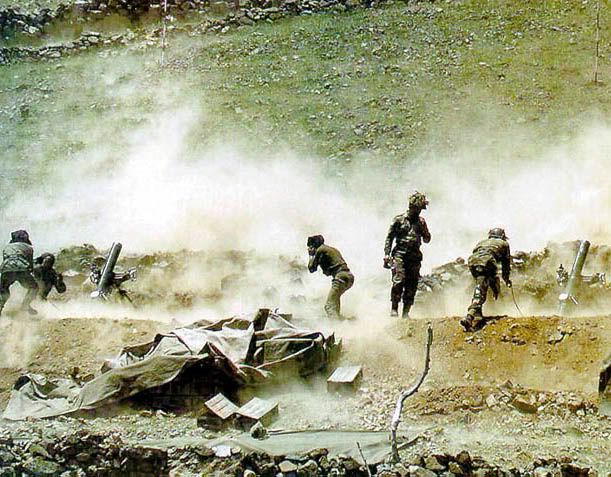
While Beijing spars verbally with New Delhi on a regular basis over Arunachal Pradesh and, more recently, displayed belligerence on the issue of oil hunting in South China Sea, the Communist neighbour could now be spoiling for an actual fight.

The threat of a Sino- Indian skirmish that may push the two Asian giants to the brink of war is so real that it has set the alarm bells ringing in the top echelons of the Union government. And, uncannily, the warning about the gathering war clouds comes just a few months before the 50th anniversary of the real war that had broken out between the countries when China launched simultaneous offensives in Ladakh and across the McMahon Line on October 20, 1962.

Last week, India's external intelligence agency Research and Analysis Wing (RAW) informed the government in a secret note accessed by HEADLINES TODAY that there was a possibility of a skirmish or an incident triggered by China on the Line of Actual Control (LAC). Beijing, the input stated, was contemplating such an action to divert attention from its own domestic trouble.

The assessment, shared with Prime Minister Manmohan Singh, senior national security officials and the brass of the armed forces, is now being discussed at the highest levels of the government and has raised concern. The RAW note substantiated its claim by pointing to increased Chinese activity along the LAC. For the first time, China had stationed fighter aircraft in the Gongga airfield in the Tibet Autonomous Region throughout the winter months. It also activated new surveillance and tracking radars in the Lanzhou Military Region bordering India as well as in Tsona to monitor Indian activity, the RAW said.

According to the agency, the People's Liberation Army (PLA) conducted a large- scale Indiaspecific exercise in the Tibet Autonomous Region and Qinghai Plateau Region on June 14.The threat assessment was made against the backdrop of these developments, coupled with the perceived threat to China's domestic stability owing to internal political developments, economic problems and social issues in the run- up to the 18th party congress, which would determine a power transfer in March next year.

Ahead of this event, a tectonic shift will be witnessed in China's political landscape in 2012. President Hu Jintao will step down later this year as the general secretary of the Communist Party and hand over the reins to current Vice- President Xi Jinping. Xi, who is now 58, will take charge as the Chinese President in 2014. Along with Hu, seven out of the nine members of the party's highest decision- making body - the Politburo Standing Committee - are expected to retire. This includes current Premier Wen Jiabao, who is likely to be replaced by Vice- Premier Li Keqiang. "The Chinese leadership could be tempted to galvanise inherent xenophobic fervour to divert domestic attention to an external threat. In this context, there are two potential areas of tension. The first is the ongoing stand- off in the Scarborough Shoal area and the other is Tibet," the note stated.

Scarborough Shoal, located in South China Sea or West Philippine Sea, is being claimed by three countries: China, the Philippines and Taiwan. Tension between Manila and Beijing grew when the governments of the two nations accused each other of illegally occupying territorial waters near the shoal. It sparked nationalist sentiments in both countries and the word " war" was mentioned by several commentators.

But diplomatic sources disclosed that the Indian assessment was based on the fact that Beijing may not risk a war in South China Sea because it could lead to the US and other Western countries coming to the Philippines' rescue. In the case of the Sino- Indian boundary, however, the possibility of a skirmish was much higher because it was disputed, they explained.

Sources said this assessment took into consideration China's displeasure over the role of the Dalai Lama in allegedly fomenting trouble, including immolations, in Tibet. Provoking a skirmish with India may be part of a deliberate strategy to teach India a lesson, they added. "A prolonged conflict is, however, unlikely," the report concluded.

BORDER TROUBLE

So far, 14 rounds of boundary negotiations between the two countries have not yielded a breakthrough. The report notes Chinese anxiety over India's growing relationship with the US and Southeast Asian countries. Some hardliners in the top Chinese leadership have blamed the Dalai Lama for violence in Tibet.The Chinese also see India's hand since the country hosts the Dalai Lama.

China's internal economic and social troubles are likely to force its leadership to divert attention by having a skirmish with India. China has been closely following India's military expansion. It made more than 350 intrusions on the LAC last year to strengthen its stand on the boundary dispute.

Thursday, 5 July 2012

Five men and one woman suspected of preparing terrorist attacks London

Five men and one woman suspected of preparing terrorist attacks were arrested during early morning police raids across London on Thursday, the capital's Metropolitan Police said.

Police said the operation was not linked to the Olympics, which start in London on July 27, but was part of a planned intelligence-led operation.

In a separate and apparently unrelated incident, armed police closed both carriageways of a motorway near Britain's second biggest city, Birmingham, after reports of a man acting suspiciously on a coach heading for London.

A security source said the London arrests were related to international Islamist terrorism and were made at an early stage of plotting. It was not clear if any targets were identified.

During the raids, a 29-year-old man was arrested on a street in west London while the others, aged between 18 and 30, were detained at residential addresses in east and west London.

A 24-year-old man was tasered during the operation by armed police but did not require hospital treatment.

Police said the six were arrested on suspicion of the "commission, preparation or instigation of acts of terrorism" and were taken to a police station in southeast London.

Detectives were searching eight homes in east, west and north London, and one business address in east London.

British security forces are on high alert for any signs of trouble ahead of the Olympics. Seven years ago suicide bombers killed 52 people in a string of coordinated attacks in London.

In the Birmingham incident, coach operator Megabus confirmed police were investigating an allegation against a passenger on the coach which had been travelling from Preston in north England to London.

All the passengers were taken off the coach and lined up on the tarmac of the M6 toll motorway just north of Birmingham.

Live helicopter television footage showed about 30 people sitting or standing inside a large rectangular police cordon.

Emergency vehicles and a bomb disposal unit were at the scene, the BBC reported.

(Reporting by Tim Castle and Phil Noble; Editing by Belinda Goldsmith)

Tuesday, 3 July 2012

7-magnitude quake hits New Zealand About 2 Hrs

An undersea quake measuring 7.0 on the Richter scale struck New Zealand but there was no report of damage or casualty, authorities said on Wednesday.

The tremor occurred around 10.30 pm on Tuesday off south Taranaki coast, Xinhua quoted the geological agency GNS Science as saying.

The epicentre was located at sea, 170 km from Wellington.

The quake was felt in Napier, Dunedin and Wellington, among other places.

Site Search